31 May 2012

Organizational Capacity Building, or: "What would you say, you 'do' here?"

Before I left America, it was a challenge to describe what I would be doing for two years in Azerbaijan as a Community Economic Development Advisor Volunteer because the work varies from site to site, from organization to organization.  Even now, after approximately eight months in-country, it remains a challenge because of the diversity of assignments and organizations with which I partner, but here is one example:


29 May 2012

Better Know a Holiday: 28 May

Parade in front of the Elmler Akademiyası Metro Station
If you read about Azerbaijan enough, you'll probably come across the fact that, on May 28, 1918, it became the first successfully established secular Islamic democratic republic in the world (following the short-lived Transcaucasia Democratic Federative Republic consisting of Azerbaijan, Georgia, and Armenia).  You may also hear that during this time (1919) Azerbaijan became the first Islamic nation to grant voting rights to women, predating national women's suffrage in the U.S. by about one year.  Obviously, the birth of the republic was not celebrated during Soviet times, but it was revived as a national holiday upon independence in 1991.

Not to diminish these historical achievements, but what is often left unmentioned in the same breath uttering this bit of trivium is that this republic lasted only about two years, from 28 May 1918 (collapse of the Russian empire) to 1920 (Bolshevik / Soviet / communist conquest) and that no one involved in the practical operation of the country today actually remembers how a fully-functional democratic republic works.  

In the spirit of short-lived things in history involving the 28th of May:
  • 1503 - Margaret Tudor wed James IV of Scotland and the Treaty of Everlasting Peace between England and Scotland was signed.  The peace lasted 10 years.
  • 1533 - Marriage of Henry VIII and Anne Boleyn was declared valid by the Archbishop of Canterbury.  The marriage lasted 3 years.
  • 1588 - The Spanish Armada set sail for the English Channel from Lisbon.  Less than three months later, it was defeated by the English at the decisive battle of Gravelines.
  • 1940 - The 18-day Battle of Belgium ended with Belgium's surrender to Germany.

06 April 2012

Better Know a Holiday: Novruz Bayramı

Literally, of course, Novruz is not a "holi"-day in the sense that it is a secular celebration.  Indeed, I have heard of some pious Azerbaijanis who do not celebrate it because they say that the Qu'ran recognizes only two holy days (Qurban and Ramadan), which does not include Novruz.  

Anyway, last month marked my first experience of Novruz in Azerbaijan.  It was like a cross between Halloween and one of those Thanksgivings where you have multiple familial food-intake obligations to fulfill in one day.


In addition to celebrating with my current host family, I managed to visit three other families in the settlement in which we had Pre-Service Training (PST): my PST host family, my PST host uncle's family (which hosted my training cluster's Language and Cultural Facilitator (LCF)), and a neighboring host family where I guested a lot.


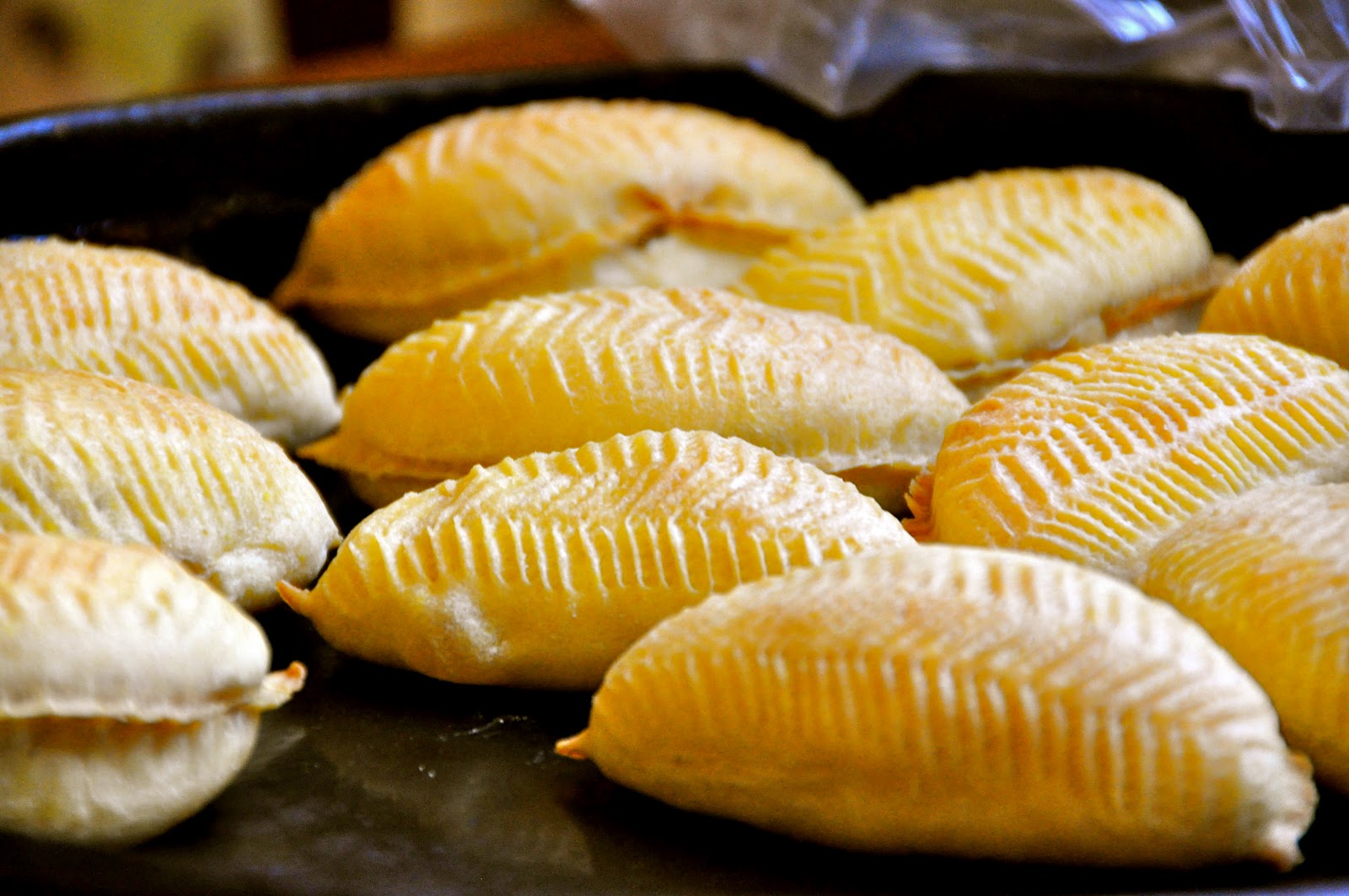
Like a long day of Thanksgiving meals, I had to pace myself when I visited each family, but the traditional foods were basically the same: rice with dried apricots, raisins, and chestnuts; chicken levengi, fish levengi, baxlava, şəkərbura (which looks sort of like an empanada but has a sweet filling). 


In anticipation of Novruz, Peace Corps Azerbaijan's director of language and cultural training sent out a great write-up about Novruz, which I can't top, so I have reproduced it below.  The pics are mine; the text is not, except for my [italicized comments in brackets]:

"Novruz is the most widely celebrated holiday in Azerbaijan.  It symbolizes the end of winter and the coming of spring. The word ‘Novruz’ comes from the Farsi word for 'new day', and is a celebration of the spring Equinox.   Novruz is celebrated on the first day of spring. The first day of spring on the calendar is determined by the annual rotation of the Sun.  


Torpaq ("Earth") Day at one of my organizations
"According to old inscriptions, the holiday of Novruz was established in 505 B.C.  Zoroastrians celebrated Novruz during the Spring Equinox, which falls on either March 20th or 21st. Preparation for Novruz begins one month prior to the holiday itself. Several major preparation days representing the four elements of nature take place on the four Tuesdays leading up to Novruz: Su Charshabnasi (water-Tuesday) Od Charshanbasi (Fire -Tuesday), Yel Charshanbasi (wind -Tuesday), and Akhir or Torpag Charshanbasi  (final or - earth Tuesday).  [As a state-side friend mused, it's like Captain Planet and the actual day of Novruz is the heart.According to ancient folk beliefs, the first Tuesday is for water, which purifies.  This is followed by Fire Tuesday, then Wind and then finally Earth.   [I celebrated 'Earth' Day with a lunch at one of my organizations. See right.These elements awaken nature and the trees begin to blossom. As implied by its timing and natural significance, Novruz is a time of renewal and symbolizes rebirth, awakening, cleanliness and newness. Thus, the Novruz holiday is connected with spring, the beginning of agricultural work, renewal of nature and the approach of warm days. Understandably, this period of the year has always been important for Azerbaijanis. In agricultural areas, trees are pruned and fields are cleared. One tradition is the annual Novruz cleaning, which is similar to the American tradition of “spring cleaning.” Families wash their rugs, draperies, and beddings, clean and wax their furniture and often repaint the interior of their homes. [In a feat of continued gender-role-breaking (you may recall that I helped do the dishes after Thanksgiving, much to the amusement of my friend's host mom), I did the spring cleaning of my own room.]

"During the Soviet period it was prohibited to celebrate Novruz but despite the many years of Soviet rule, Novruz has retained much of its ancient traditions and games. For example, ‘Kos-Kosa' funny square game (the symbol of spring's coming) and fortune-telling are among them. Another tradition connected with Novruz is jumping over fire, the symbol of purification and clarification. Bonfires are made before the Novruz holiday on Akhir Charshanba. Regardless of age or gender, people jump seven times over one bonfire, or once over seven bonfires and say, “Give me your redness and take my yellowness.” This can also be translated as, “Take my hardships, give me your lightness.” Thus, hardships and troubles from the past year are “dropped” into the flames of the bonfire. [For whatever reason, I was informed that I needed only to jump over the bonfire three times.]

Sprouting own wheat
 "The most enjoyable tradition is “Papaq atma”, or in English, “hat throwing”. This is similar to the American tradition of “trick or treat,” in that children visit their neighbors and leave their caps or a basket on the door step. The children knock on the door, and then hide to see if they will receive candy, nuts or treats.  [Not having a hat, I didn't go door-to-door to receive any candy, but I did help give some out.]


"Several things are used to symbolize the occasion; in Azerbaijan sprouted wheat is a favourite. Sprouted wheat is grown in a small vase and placed in a prominent place in the house, such as the center of the table. The vase with the wheat is called a 'samani'. Usually, a samani bunch is fastened with a red ribbon. [On TV, I saw advertisements for sprouted wheat in some very fancy designs for up to 2000 AZN, which is about $2600 USD(!).]

Fresh, home-made baxlava
 "Azerbaijanis pay particular attention to the table setting for the holiday. There should be seven varieties of food on the table. Usually people put a khoncha- a tray -  with all kinds of food, raisins, nuts, sweets, dried fruits, coloured eggs and candles - on the table. Families prepare special Novruz deserts to reenergize bodies and spirits after a cold winter. If Samani is a green symbol of Novruz, two desserts, Pakhlava (baklava) and Shekerbura, are the spring holiday’s sweet symbols. No Novruz table is complete without şəkərbura and baxlava.  [There is so much baxlava and şəkərbura around this time of year that afterwards, your body goes into withdrawal from the decrease in sugar supply once leftovers run out.]

"According to tradition, all close family members should be at home on the first day of the holiday. People say: 'If you are not at home on the day of the holiday, you will be homeless for seven years.' Outer doors are kept open, because children throw hats, girls sneak the doors of their neighbors etc. In rayons if the outer door is not open it is not possible to do  these activities. Usually there is a long distance between outer doors and inner doors.

Fresh-out-of-the-oven şəkərbura
"The peak of Novruz is the time when the past year gives its place to the new one. In the old days, people shot pistols into the air in honour of Novruz. Nowadays, pistols have been replaced by fireworks and feasting. On the first day of the New Year, lights are kept turned on all night, as a turned-off light and/or fire are symbols of misfortune. On the first day of the New Year, it is a tradition to rise early in the morning. If it is possible, people go to a local water source (such as a river or spring) where they wash themselves and splash water on each other. Water is a symbol of cleanliness and freshness.


"Novruz Bayramı is one of the most ancient and beautiful festivities in Azerbaijan. There are a lot of legends and fortunetelling related to "Axir Chershenbe" ("Last Tuesday") that precedes Novruz (March 20-21). Many believe that fortunetelling before dusk on this day might predict the future. Unmarried girls do not miss an opportunity to find out on this day when and who they will marry. Around dusk, Azerbaijani girls and young men sneak to doors of their neighbors and eavesdrop on their conversations. Then, based on the first words they heard, they try to tell their fortune and guess if their wishes will come true." [When my host sister eavesdropped, she was excited to hear the word "congratulations."]

12 March 2012

Khojaly (Xocalı) and the Post-Cold War Era

Since the end of February, I've been thinking about what I could contribute to the coverage of Khojaly.  I'm not sure what there is to write about this that hasn't already been written before, but it did get me thinking about the bigger geopolitical picture in this region (and others) after the collapse of the Soviet Union.  

But first, very brief background about Khojaly: beginning on the night of February 25, 1992, during the Nagorno-Karabakh War, which broke out between neighbors Azerbaijan and Armenia as the Soviet Union collapsed, Armenian forces and some CIS troops occupied the town of Khojaly (or 'Xocalı' in the Azerbaijani).  The majority of residents fled, who were joined by some members of the local garrison.  One column of refugees ran into an Armenian military post, which fired indiscriminately, killing civilians, including women, children, and the elderly, as well as the garrison militia members who were trying to defend the group.

As tragic as the needless killing of civilians is, that is not my focus, as it has been covered extensively by others.  (See below for a selection of links.)  History has amply shown us that it is the nature of war to set the stage for people to commit atrocities, usually on all sides of any armed conflict, given adequate time, fear, and opportunity.  In this sense, Xhojaly is just one more sad, microcosmic reflection of a wider trend of regional conflicts that will only become more frequent in the foreseeable future.  

During the Cold War, regional conflicts (sometimes deeply rooted, age-old animosities based on religion, ethnicity, and/or nationalism) were subsumed within and frozen, if you will, by the global conflict between the West, led by the U.S. and NATO allies, and the communist bloc, led by the Soviet Union and its satellites.  Perhaps people did not act out (much) because they feared that any full-scale regional conflagration could rapidly escalate into international proportions, ignite conflict between the superpowers, and thereby consume the world. Perhaps it was because the Cold War itself actually altered the way regional conflicts played out, like the Palestine-Israeli conflict, especially after the Suez crisis.  Or perhaps everyone was just preoccupied with what the big kids on the block were up to, like, you know, nuclear stalemate.

The dissolution of the Soviet Union thawed those dormant, but by no means forgotten, conflicts.  More perilously still, the power vacuum left in the wake of the collapse of the U.S.S.R. has set the stage for regional actors (such as Russia, Iran, and Turkey) to attempt to expand (or, in the case of Russia, restore) their spheres of influence, tempting further conflict.  See, e.g., 2008 armed escalation between Russia and Georgia.

What does this mean for the U.S. and other world leaders? It would be impossible and unaffordable for the U.S., Germany, Great Britain, or other nations to intervene every time a regional and/or ethnic conflict arises, but what the U.S. and others can do is lead the formation of regional coalitions to police each region's own backyard, as it were.  Short of the rise of another superpower (China, perhaps, or Russia getting the band back together)* to balance out the U.S. and generate bipolar stability, maybe that's the best we can do to help keep the peace.  (Of course, the downside of this approach is that some dominant powers in some places of the world actually benefit from instability (though not outright conflict) in their region.)

* At one time, I might have speculated about a more strongly unified European block as a quasi-superpower, but that's looking less and less likely with every passing debt crisis.

Links for further reading:
And here are some pictures of the recent awareness campaign regarding Xhojaly in New York and Washington, D.C.


29 February 2012

Scenes from Service: Winter Is Coming*

*Actually, we're hoping that the worst of winter is over (not to jinx us or anything), but that wouldn't make for a very good reference to A Game of Thrones, now would it?

"Icicle, icicle, where are you going?"
water
Getting water.
road2ccp
road2ccp2 transformer
anduwillknowus
And you will know us by the trail of...**

slipslope
Slippery slope
lakeview
Salt Lake Settlement
downroad

**Update: I should explain about this pic. Several times during heavy snows, my office was closed and/or the buses weren't running.  One such day, however, the buses were (valiantly or carelessly, I'm not sure which) running and the sun was shining brightly, so I chanced it. 

As I turned onto the last section of road heading towards my organization, I couldn't help but notice some blood in the snow.  Having seen people kill and dress animals in unconventional places before, I didn't think much of it, but a few meters down the road were more drops of blood, vividly red against the fresh snowfall from the night before.  A few steps further, a few more drops.  The clusters of droplets got closer together for a while and went right up to the gate, which was padlocked shut.   There was no work that day or the next.  By the time I returned to work, but the snow had melted away enough that there were no traces of blood.  I learned no more about this unusual sight.

26 February 2012

Scenes from a Guesting

Speaking of gender and development, it reminds me of this amusing exchange I had a while back, which I have paraphrased, changed some details for the sake of privacy, edited slightly for entertainment purposes, and translated from the combination of hand gestures and broken Azerbaijani and English in which it actually transpired.

One day, while I was guesting and talking to the kids in the family, one of the daughters mentioned that she had just been out of town with some friends.  It turns out that her parents had let her go by herself (progressive!) to a co-ed (even more progressive!) retreat near Qəbələ for the weekend (overnight?? say what?!). 


INT. LIVING/DINING ROOM, AZERBAIJAN - DAYTIME


ME
What was the retreat about?

HER
The role of women and men.

ME
(impressed and curious)
What did you learn about?

HER
Equality and laws.

MY BRAIN
[This is one progressive family...]

ME
Did you like learning about that?

HER
Yes. I - 

HER BROTHER
 Ay, sister, bring me tea.

Based on his ruddy complexion, age-appropriate height-weight ratio, and body mass index, the brother appears to be in robust health and have all the necessary basic motor skills to accomplish such a task on his own...

Sister goes to kitchen, brings tea to her brother.

MY BRAIN
[Le sigh.]

25 February 2012

International Development, Civil Rights, and the Oscars

As you may (or may not) be aware, International Women's Day is coming up in a couple of weeks.  I may blog about it later (especially as - keep your fingers crossed - I'm planning to meet with a gender equality group about potential projects), but this post reminded me of a few things that I wanted to mention now, in increasing order of importance:

First, the Oscars are on Sunday, which I otherwise totally forgot about.  Now, I was never an Academy fanatic, but being a movie buff, I did try to keep an eye on the noms (even if I had totally given up on the Oscars as an even remotely reliable sign of quality in film-making after As Good as It Gets' Helen Hunt, who is a lovely person, I'm sure, beat Judi Dench's performance in Mrs. Brown for Best Actress in 1997).  Each year, I had usually seen a few of the movies (only once had I seen everything nominated in a major category), and around this time of year, it was always an interesting topic of conversation.  This year, I don't even know what's been nominated.  It's funny how your priorities change in Peace Corps.  I'm not saying that the Oscars aren't important

Okay, I'm kind of saying the Oscars aren't important.

But almost anything can be important if we make it important.  Take this example from Reel Injun, a documentary about the portrayal of Native Americans in Hollywood:  Part of the documentary covers Marlon Brando's famous refusal to accept his Oscar for the Godfather in 1973 due to the poor "treatment of American Indians today by the film industry...and also with recent happenings at Wounded Knee," as explained in a speech on his behalf by Sacheen Cruz Littlefeather.  At the time of broadcast, the armed standoff between the FBI and Native American activists at Wounded Knee was ongoing.  Russell Means, a Lakota activist, remembers how bad morale was, how he didn't think they would make it out alive, how some of the guys were watching the Academy Awards, when "all of a sudden we get a call. They start yelling: 'Hey, there's an Indian [on TV]!" and how that moment created at the Oscars by Brando and Littlefeather "totally uplifted our lives."

Any Peace Corps Volunteer will tell you that at the top of their "most-missed" list of important things is family and friends (unless they're heartless bastards - which, incidentally, is a great band).  I think of it as missing community, of which, I, too, have keenly felt the absence.  I miss my familial community, my work community, my yoga community, my bar-trivia community, my alumni community, my neighborhood community, and yes, my community-work community.  So I may not miss Oscar himself, whether or not he's important this year, but I do miss the role that he played in facilitating conversations, vociferous disagreements, rambling digressions, and yes, bets (non-monetary, of course) among the people in my various communities.

Second, I wanted to share this video in time for the Oscars tomorrow.  As it highlights, there is still a lot of work to be done in terms of gender imbalance in America, even though opportunities in the U.S. are now much better for women than at other times in its own past and in other parts of the world today.  Moreover, Hollywood is merely a microcosm of a larger landscape of disparity and gender normative privilege.
Third, I can't help but detect an inherent, and perhaps unavoidable, degree of imperialism, colonialism, or condescension in development work, in which good-hearted, well-meaning folks from industrialized or technologically advanced countries or regions go to developing ones to help bring about a better quality of life.  At worst, I've heard international development workers (only a few, thankfully), who are doing amazing and important work, no question, talk about the communities or individuals they're helping almost like pets or small children who have learned SO much and done SO well and they're just SO proud of them.  Even at its most ego-less and self-effacing, I find something slightly patronizing about it, so the video from the Women and Hollywood blog was a good reminder that it's not like we have reached the pinnacle of civilization ourselves, that our houses, too, are glass (so to speak) and that we should try to be humble and ever mindful of our role as facilitators of (hopefully sustainable) change that comes from within the community.   It's about others, not about us.